
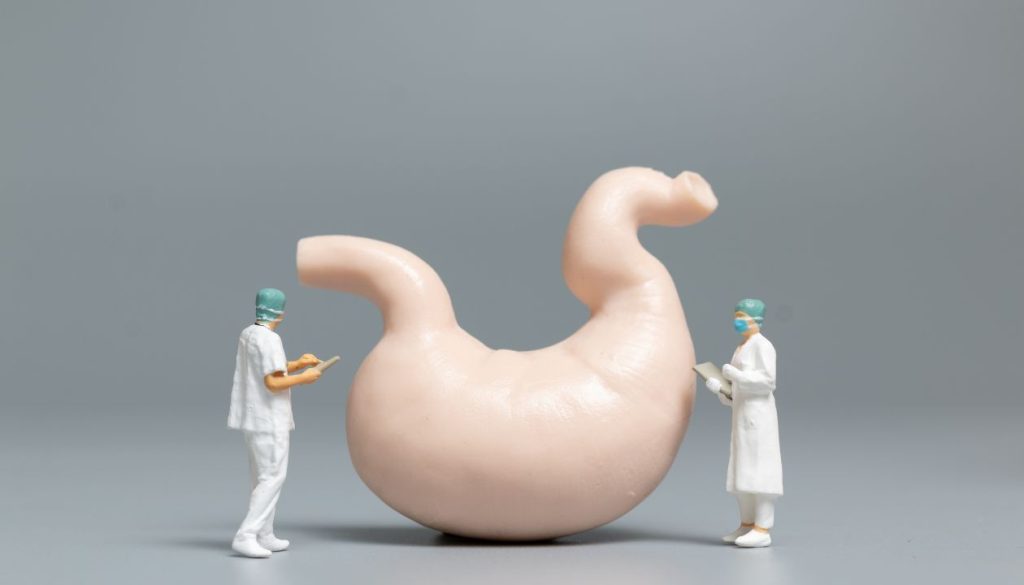
H Pylori, Heartburn and Acid Reflux
Key Points Discussed:
- H. pylori is common and often causes no symptoms.
- Some patients develop gastritis, ulcers, and stomach cancer.
- Most H. pylori acquisition happens in childhood, but disease manifests more often after age 40.
- Declining H. pylori rates coincide with increases in GERD and related diseases.
- Studies give mixed results on whether eradication of H. pylori worsens GERD.
- The mechanism connecting H. pylori to GERD is still ambiguous.
- In advanced GERD, H. pylori eradication has little effect on symptoms.
Helicobacter pylori (H. pylori) is a bacterium that colonizes the lining of the stomach. H. pylori bacteria produce its own antacids to be able to survive the harsh acidic environment of the stomach. H. pylori affect up to 30 % of the Houston population. Acquisition of H. pylori generally occurs in young children within the family environment. However, the risk of developing H. pylori related diseases increases over the age of 40.
Most individuals who have H. pylori will never manifest any symptom related to H. pylori infection. Some, however, develop gastritis (inflammation of stomach) and experience symptoms like abdominal pain and discomfort, bloating and burping as well as nausea and vomiting. Others may develop ulceration of stomach lining that results in bleeding and severe pain. H. pylori is also a risk factor for gastric cancer development.
The prevalence of H. pylori infection has declined in the United States and worldwide, which has led to a reduction in peptic ulcer disease and gastric cancer. Concomitant with this gradual decline, there has been an alarming increase in asthma, obesity, as well as GERD, Barrett’s esophagus and esophageal cancer. Some studies in the literature indicate that H. pylori eradication worsens esophagitis and GERD related symptoms, while others do not show any change in GERD symptom severity and disease progression after H. pylori is eliminated.
At Houston Heartburn and Reflux Center, we have not observed worsening GERD following H. pylori eradication. Most patients who present to our center are stage 3 and 4 GERD, so it is possible that at this stage, eliminating H. pylori has minimal impact on GERD severity. Nonetheless, the role of H. pylori in GERD pathogenies remains ambiguous. GERD is a complex multifactorial disease; H. pylori, and potentially other gut microbiota, as well as numerous gastrointestinal neurohormonal signals may influence acid reflux development and progression.
| Reference | Key Finding |
| Bor et al. (2017) | Prevalence of GERD in high H. pylori regions. |
| Mungan & Pınarbaşı Şimşek (2017) | Discusses the GERD-H. pylori relationship. |
| Xue et al. (2015) | RCT on H. pylori eradication and reflux esophagitis therapy. |
| Zhao et al. (2020) | Meta-analysis on the effect of H. pylori eradication in GERD patients. |
| Chung et al. (2011) | Shows inverse correlation between H. pylori serology and risk/severity of reflux esophagitis in an endemic area. |